

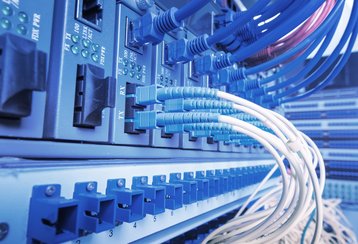
As Saudi Arabia accelerates digital transformation under Vision 2030, fiber optic networks and data centers have become the backbone of economic growth, smart cities, and mission-critical operations.
Future-proof infrastructure is no longer about capacity alone—it is about speed, reliability, scalability, and resilience.
Why Fiber Optic Infrastructure Is Critical for Saudi Arabia
Digital demand in the Kingdom is growing rapidly.
Key drivers include:
- Expansion of cloud computing and data centers
- Smart city and smart building initiatives
- Industrial automation and IoT
- Government digital services
- High-speed connectivity expectations
Fiber optics form the foundation of all modern digital ecosystems.
What Are Fiber Optic Networks?
Fiber optic networks transmit data using light through optical fibers.
Core characteristics include:
- Ultra-high bandwidth capacity
- Very low signal loss over long distances
- Immunity to electromagnetic interference
- High reliability and security
These properties make fiber optics superior to traditional copper networks.
Advantages of Fiber Optic Networks Over Copper Systems
Fiber optics outperform legacy systems in every critical metric.
Key advantages include:
- Much higher data transmission speeds
- Longer transmission distances without repeaters
- Lower latency for real-time applications
- Improved cybersecurity resistance
- Reduced maintenance requirements
For Saudi mega projects, copper networks are no longer sufficient.
Role of Fiber Optics in Data Center Infrastructure
Data centers rely entirely on fiber connectivity.
Fiber systems support:
- High-density server environments
- Fast data exchange between racks
- Redundant communication paths
- Reliable external connectivity
Without fiber, modern data centers cannot operate efficiently.
Data Centers as Mission-Critical Facilities
Data centers operate with zero tolerance for failure.
Key operational requirements include:
- Continuous uptime
- Redundant power and cooling
- Secure access control
- Advanced fire detection systems
- High-availability network infrastructure
Fiber networks ensure uninterrupted data flow.
Fiber Optic Network Design Principles
Proper design is essential for performance and scalability.
Best-practice design includes:
- Accurate bandwidth forecasting
- Redundant routing paths
- Structured cabling architecture
- Future expansion allowances
- Clear labeling and documentation
Poor design limits growth and increases risk.
Scalability and Future Expansion Readiness
Digital infrastructure must grow with demand.
Fiber networks support scalability by:
- Allowing easy capacity upgrades
- Supporting higher data rates without recabling
- Enabling modular expansion
- Integrating with future technologies
Scalable design protects long-term investment value.
Reliability and Redundancy in Fiber Networks
Uptime depends on redundancy.
Professional fiber designs include:
- Dual routing paths
- Ring or mesh topologies
- Backup links and failover strategies
- Continuous monitoring systems
Redundancy minimizes downtime and service disruption.
Fiber Optics and Cybersecurity
Physical network security is a critical concern.
Fiber networks enhance security by:
- Preventing electromagnetic signal tapping
- Supporting secure encryption technologies
- Limiting unauthorized access points
- Integrating with access control systems
This is vital for government and enterprise data centers.
Environmental Resistance and Long-Term Durability
Saudi Arabia’s environment challenges infrastructure longevity.
Fiber systems offer:
- Resistance to heat and corrosion
- Long operational lifespan
- Minimal signal degradation
- Lower failure rates
This makes fiber ideal for harsh operating conditions.
Integration with Low Current and IT Systems
Fiber networks do not operate alone.
They integrate with:
- Low current systems
- Security and surveillance platforms
- Building management systems
- Industrial control networks
Integration ensures unified, intelligent operations.
Authority Requirements and Regulatory Compliance
Fiber and data center infrastructure must meet regulations.
Compliance areas include:
- Saudi communication standards
- Data security requirements
- Fire and safety integration
- Approved documentation and testing
Early compliance planning avoids approval delays.
Common Mistakes in Fiber & Data Center Projects
Frequent planning errors include:
- Underestimating future bandwidth needs
- Poor cable routing and management
- Lack of redundancy
- Late integration with other systems
- Inadequate documentation
These mistakes limit performance and scalability.
Role of Specialized Infrastructure Providers
Fiber and data center projects require expertise.
Specialized providers deliver:
- Optimized network design
- High-quality installation
- System integration
- Testing and certification
- Long-term support
Expert execution ensures future-proof results.
Fiber Networks and Vision 2030
Vision 2030 depends on digital infrastructure.
Fiber optics enable:
- Smart cities
- Digital government
- Industrial transformation
- Knowledge-based economy growth
Future-ready fiber networks are national infrastructure assets.
Long-Term Value of Future-Proof Digital Infrastructure
Well-designed fiber networks deliver:
- Lower lifecycle costs
- Higher reliability
- Improved scalability
- Enhanced operational efficiency
- Increased asset value
Digital readiness is a competitive advantage.
Conclusion – Fiber Optics Are the Backbone of the Future
In Saudi Arabia’s digital economy, fiber optic networks and data centers are not optional—they are essential infrastructure.
They provide:
- Speed and reliability
- Scalability and security
- Operational resilience
- Long-term value
Future-proof projects start with fiber.
we are here
If your project requires high-performance fiber optic networks or data center infrastructure designed for scalability and reliability, expert planning and execution are essential.
Contact RDC today to build future-ready digital infrastructure that supports growth, security, and long-term success across Saudi Arabia.
