

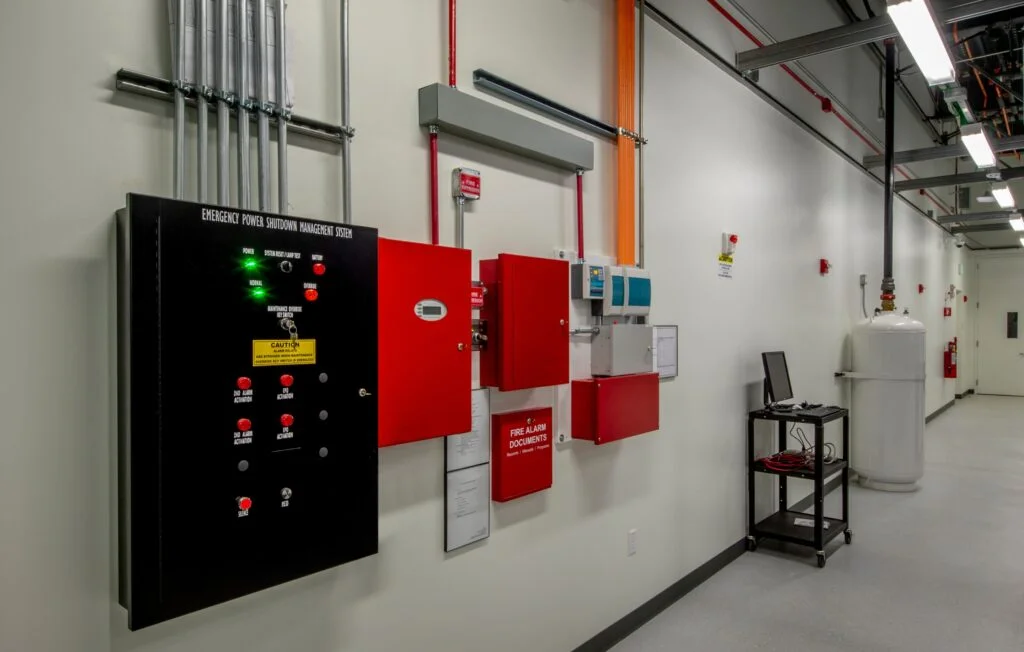
In Saudi Arabia, fire alarm systems are not optional technical additions—they are life-safety systems mandated by law.
Any failure in design, installation, or compliance can result in project delays, rejection by authorities, or serious safety risks.
Understanding compliance requirements, proper design principles, and best practices is essential for developers, consultants, and facility owners.
What Is a Fire Alarm System?
A fire alarm system is a low current life-safety system designed to detect fire hazards and alert occupants and authorities.
Core components include:
- Smoke detectors
- Heat detectors
- Flame detectors
- Manual call points
- Fire alarm control panels
- Sounders and visual alarms
- Communication interfaces
These systems operate continuously and must perform flawlessly during emergencies.
Why Fire Alarm Systems Are Critical in Saudi Arabia
Saudi Arabia’s building environment presents unique risks.
Key factors include:
- Large-scale, high-occupancy developments
- Extreme temperatures affecting system performance
- Strict Saudi Civil Defense regulations
- Complex building layouts
- High asset and life-safety exposure
Fire alarm systems form the first line of defense.
Saudi Civil Defense and Regulatory Requirements
Fire alarm systems must comply with Saudi Civil Defense standards.
Key compliance areas include:
- Approved system types and technologies
- Authority-approved design drawings
- Installation by qualified contractors
- Testing, commissioning, and certification
- Regular inspection and maintenance readiness
Non-compliance can stop a project entirely.
Fire Alarm System Design Principles
Proper design determines system effectiveness.
Best-practice design principles include:
- Accurate risk and hazard assessment
- Proper detector selection by area type
- Correct detector spacing and zoning
- Redundant communication paths
- Clear alarm notification coverage
Design errors lead to false alarms or undetected fires.
Types of Fire Detectors Used in Saudi Projects
Different environments require different detection methods.
Common detector types include:
- Smoke detectors for offices and residential areas
- Heat detectors for kitchens and industrial spaces
- Flame detectors for high-risk industrial zones
- Multi-criteria detectors for complex environments
Correct detector selection improves reliability.
Fire Alarm Control Panels and System Architecture
The control panel is the system’s brain.
Key considerations include:
- Addressable vs conventional systems
- System scalability
- Integration capability with other safety systems
- Redundancy and backup power
- Event logging and diagnostics
Panel selection affects long-term system performance.
Integration with Firefighting and Safety Systems
Fire alarms must integrate with other systems.
Integration typically includes:
- Firefighting and suppression systems
- Access control and door release
- Elevators and HVAC shutdown
- Emergency lighting systems
- Central monitoring platforms
Integration ensures coordinated emergency response.
False Alarm Prevention and System Reliability
False alarms cause disruption and loss of trust.
Best practices to reduce false alarms include:
- Correct detector placement
- Environmental condition assessment
- Detector sensitivity calibration
- System zoning optimization
- Regular testing and maintenance
Reliable systems improve occupant confidence.
Installation Best Practices
Even the best design fails with poor installation.
Best installation practices include:
- Approved materials and devices
- Proper cable routing and labeling
- Secure mounting of devices
- Compliance with spacing and height standards
- Thorough installation inspections
Installation quality defines system reliability.
Testing, Commissioning, and Certification
Commissioning validates system performance.
Commissioning processes include:
- Functional testing of all devices
- Alarm and notification verification
- Integration testing with other systems
- Authority witness testing
- Final certification issuance
Without commissioning, systems are legally unusable.
Maintenance and Lifecycle Management
Fire alarm systems require continuous care.
Maintenance best practices include:
- Routine inspection schedules
- Preventive maintenance programs
- Detector cleaning and calibration
- Battery and power backup testing
- System performance documentation
Maintenance ensures long-term compliance and safety.
Fire Alarm Systems in High-Risk Facilities
Certain facilities require advanced fire protection.
High-risk environments include:
- Industrial plants
- Data centers
- Hospitals
- Warehouses and logistics hubs
- High-rise buildings
These facilities demand higher system reliability and redundancy.
Common Fire Alarm Compliance Mistakes
Frequent mistakes include:
- Late system design integration
- Ignoring Civil Defense guidelines
- Incorrect detector selection
- Poor documentation
- Inadequate commissioning
These mistakes cause approval delays and rework.
Role of Specialized Low Current Contractors
Fire alarm systems require specialized expertise.
Professional contractors provide:
- Authority-compliant system design
- Certified installation teams
- Full documentation support
- Smooth approval coordination
Specialization reduces risk and delays.
Fire Alarm Systems and Vision 2030
Vision 2030 promotes:
- Safe urban development
- Smart infrastructure
- High-quality construction standards
- Sustainable and resilient cities
Compliant fire alarm systems support these objectives directly.
Fire Alarm Systems as a Legal and Moral Responsibility
Fire alarm systems protect more than assets.
They protect:
- Human lives
- Business continuity
- Legal compliance
- Corporate reputation
Fire safety is both a legal obligation and ethical duty.
Conclusion – Compliance and Design Save Lives
In Saudi Arabia, fire alarm systems must be designed correctly, installed professionally, and maintained continuously.
Proper systems deliver:
- Early fire detection
- Faster emergency response
- Regulatory compliance
- Reduced property damage
- Life-saving protection
Fire alarm systems are non-negotiable safety infrastructure.
we are here
If your project requires fully compliant, expertly designed fire alarm systems approved by Saudi Civil Defense, professional execution is essential.
Contact RDC today to design, install, and commission fire alarm systems that meet regulations, protect lives, and secure your project’s approval without delays.
