

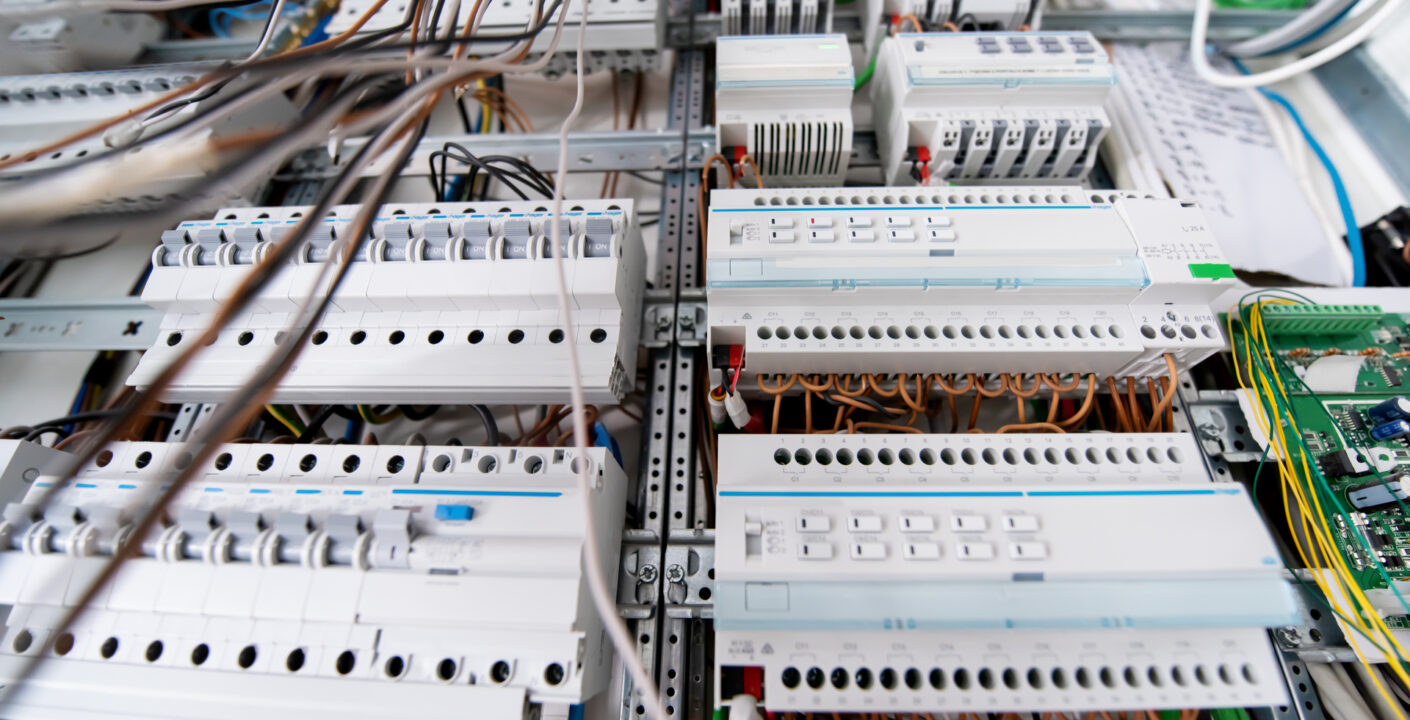
Behind every modern facility in Saudi Arabia lies a sophisticated layer of technology that rarely attracts attention—but determines safety, efficiency, and operational continuity.
These are low current systems, the hidden infrastructure powering smart buildings, industrial plants, and mission-critical facilities.
As the Kingdom accelerates digital transformation under Vision 2030, low current systems have become a core strategic asset, not a secondary installation.
What Are Low Current Systems?
Low current systems are low-voltage electrical systems designed to support communication, security, safety, and automation.
They typically include:
- Security and surveillance systems (CCTV)
- Access control and gate systems
- Fire alarm and firefighting systems
- Structured cabling and communication networks
- Fiber optic systems
- Data center infrastructure
- In-building coverage systems
These systems operate continuously and invisibly—but their impact is critical.
Why Low Current Systems Are Essential in Saudi Projects
Saudi projects face unique technical and operational demands.
Key drivers include:
- Large-scale and high-occupancy developments
- Strict safety and Civil Defense regulations
- Smart city and digital infrastructure initiatives
- Business continuity requirements
- High-value assets requiring protection
Low current systems form the foundation of smart and secure facilities.
Security and Surveillance Systems as a Core Protection Layer
Security systems protect people, property, and operations.
Modern CCTV systems provide:
- High-definition real-time monitoring
- Centralized control rooms
- Remote access and recording
- Intelligent video analytics
Benefits for Saudi facilities include:
- Improved security response
- Reduced theft and intrusion risk
- Enhanced operational oversight
- Regulatory compliance
Access Control Systems for Controlled Facility Entry
Access control systems regulate movement within facilities.
Advanced solutions offer:
- Biometric authentication
- Smart card and PIN access
- Zoning and restricted areas
- Integration with CCTV and alarms
These systems:
- Prevent unauthorized access
- Protect sensitive areas
- Track movement and activity
- Improve governance and accountability
Fire Alarm Systems and Life Safety Compliance
Fire protection is a legal and operational priority.
Low current fire systems include:
- Smoke, heat, and flame detectors
- Intelligent fire alarm panels
- Emergency notification systems
- Integration with firefighting systems
Compliance ensures:
- Early detection and response
- Occupant safety
- Approval from Saudi Civil Defense
- Reduced property damage
Communication Networks as the Digital Backbone
Modern facilities rely on reliable data and communication systems.
Low current communication infrastructure includes:
- Structured cabling systems
- Fiber optic networks
- Voice and data transmission
- Secure network architecture
These networks support:
- High-speed connectivity
- Secure data flow
- Scalability for future expansion
- Smart building integration
Fiber Optic Systems for High-Speed, Reliable Connectivity
Fiber optics are essential for digital transformation.
Key advantages include:
- Ultra-fast data transmission
- Low latency and high reliability
- Immunity to electromagnetic interference
- Long-distance performance
Fiber systems are critical for:
- Data centers
- Industrial facilities
- Smart buildings
- Commercial mega projects
Low Current Systems in Data Centers
Data centers demand the highest system reliability.
Low current systems support:
- Secure access control
- Continuous monitoring
- Fire detection and suppression
- Redundant communication paths
Well-designed systems ensure:
- Zero downtime tolerance
- Data protection
- Operational resilience
Integration with MEP and Building Management Systems
Low current systems must integrate seamlessly with other building systems.
Integrated design ensures:
- Centralized monitoring and control
- Faster fault detection
- Improved system coordination
- Enhanced operational efficiency
Poor integration increases risk and cost.
Regulatory Compliance and Authority Approvals
Low current systems must meet strict Saudi regulations.
Compliance includes:
- Saudi Civil Defense requirements
- Fire and safety standards
- Approved technical documentation
- Successful inspections and testing
Early compliance planning avoids delays and rework.
Scalability and Future-Proof Infrastructure
Facilities evolve over time.
Well-designed low current systems provide:
- Modular architecture
- Easy system expansion
- Compatibility with smart technologies
- Long-term adaptability
Future-proofing protects investment value.
Business Continuity and Operational Reliability
System failure can halt operations.
Low current systems support continuity through:
- Continuous monitoring
- Early fault detection
- Secure communication
- Emergency response readiness
This is essential for:
- Industrial plants
- Healthcare facilities
- Government buildings
- Commercial hubs
Reducing Operational Risk Through Integrated Delivery
Using a single specialized provider improves outcomes.
Integrated delivery ensures:
- Unified system design
- Reduced coordination errors
- Faster implementation
- Consistent quality standards
This reduces lifecycle risk and cost.
Low Current Systems and Vision 2030
Saudi Vision 2030 emphasizes:
- Smart infrastructure
- Digital transformation
- Safety and resilience
- Sustainable development
Low current systems are key enablers of these objectives.
Common Mistakes in Low Current System Planning
Frequent issues include:
- Treating systems as secondary installations
- Late-stage design coordination
- Underestimating capacity needs
- Poor integration with other systems
These mistakes lead to higher costs and performance issues.
Role of Specialized Engineering Expertise
Low current systems require specialized knowledge.
Expert teams provide:
- Accurate system design
- Technology selection
- Integration planning
- Long-term performance optimization
Generic solutions often fail in complex Saudi projects.
Conclusion – The Power Behind Smart Facilities
Low current systems may be hidden—but their impact is profound.
They enable:
- Safety and security
- Digital connectivity
- Operational efficiency
- Business continuity
- Smart facility performance
In Saudi Arabia’s modern developments, low current systems are no longer optional—they are essential infrastructure.
we are here
If your project requires secure, compliant, and future-ready low current systems, expert design and integration are critical.
Contact RDC today to implement advanced low current solutions that protect assets, support operations, and power smart facilities across Saudi Arabia.
